

Mobile gaming has been, for quite some time now, the largest segment in the industry.
In hindsight, that’s not surprising.
Smartphones are effectively a necessity to navigate the world (unlike gaming computers or consoles). Their growing performance and portability can make them the smoothest access point for users to access a game.
They already have the device, the data plan and the digital store. The game is just a click away.
So it’s no surprise that this segment was valued at around $103–$121 billion in 2025 and is expected to reach $134-$137 billion by the end of 2026. That’s more than PC and console gaming combined!
In terms of gamer pool, mobile accounts for almost 3.6 billion players in 2025, almost half the entire planet. In fact, according to the 2025 China Game Industry Annual Report, China alone is the home of 683 mobile gamers.
With its worldwide popularity, succeeding in this industry implies having to market your game to cultures different than your own.
And that starts with speaking their language.
With that in mind, we will detail all the necessary elements and steps to get it right in order to successfully localize your mobile game to worldwide audiences and hopefully become the next Candy Crush.
Is mobile game localization still worth it in 2026?
Mobile game localization is one of the most effective ways to access more gamers and, thus, revenue. In fact, CSA Research found that localizing products and services boosts revenue by 40% and customer satisfaction by 76% in all industries.
But it’s not just our opinion or polling results. There are plenty of real-life success stories.
Genshin Impact: When localizing your mobile game leads to international success
According to Accio, in 2025, Genshin Impact had reached the impressive milestone of $10 billion in lifetime revenue. But more importantly, 45% of its lifetime revenue came from international sources—not its local market (China).
According to GameObserver, this trend is even clearer when it comes to in-game (or in-app) sales. Chinese gamers account for 38.5% of in-game revenue, followed by Japanese players at 21.5%, Americans at 16%, and South Koreans at 5.8%.
Looking at iOS downloads, China led with 22%, followed by the U.S. (11%), Russia (7%), Indonesia (6%), and Japan (5%).
What’s particularly noteworthy is Japan’s performance—despite ranking fifth in downloads, it is the highest-spending overseas market on iOS.
However, you can only reap the benefits of localization if it’s done well. Professional game localization companies can adapt your game to meet different regions’ cultural, legal, and customary standards.
Without addressing these cultural and linguistic differences, gamers from these markets may perceive your game’s quality negatively.
When localization isn't a priority—Terraria's case
When proper localization isn’t prioritized, consequences can range from minor embarrassment to significant PR damage. Terraria, the popular sandbox game, provides a vivid example of this through a simple UI translation error.
The game’s English menu included a “Map disabled” toggle—a straightforward feature to hide the map interface. However, in the German version, this was incorrectly translated to “Karte für Behinderte” (meaning “Map for Disabled People”).
This insensitive mistranslation not only failed to convey the feature’s purpose but also risked offending the game’s German-speaking community.
This incident demonstrates how even small translation oversights can create unintended, problematic meanings that could have been avoided with proper localization review.

While language accuracy is essential, it is just one ingredient of mobile games localization. Adapting the many cultural elements of a game is a core feature of localization. This article will cover the important ones that must be addressed during the localization process.
A framework for cultural acceptance
According to DataEye, mobile game localization operates on different perceptual levels. The primary challenge is addressing cultural and aesthetic differences.
Only after these can we move on to practical aspects, which include local regulations, market research, and distribution processes.
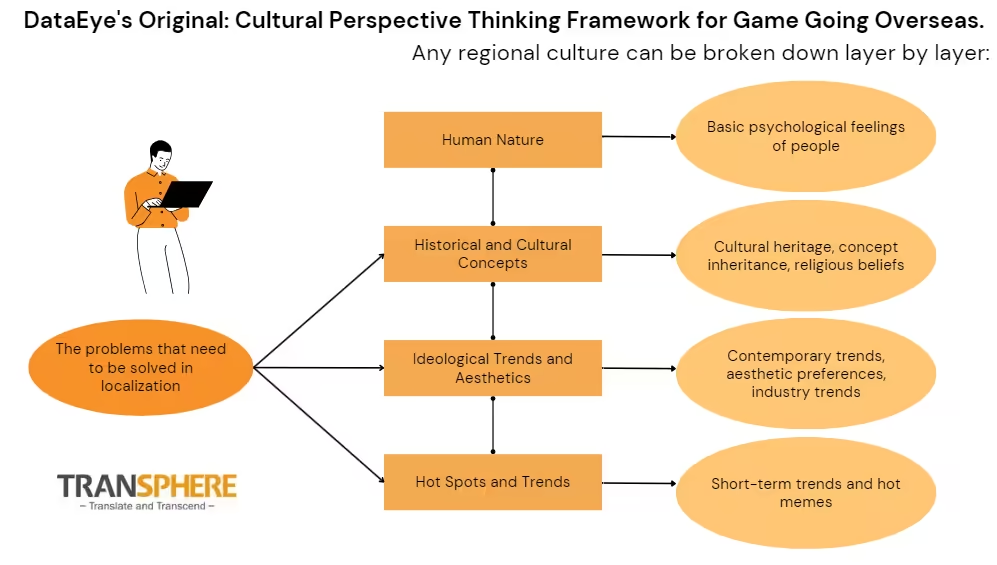
In the framework shown above, localization must address three primary cultural considerations:
- Historical-cultural perspectives.
- Contemporary aesthetic preferences.
- Popular trends.
While trends come and go, historical-cultural elements and aesthetic preferences remain relatively stable over time. Understanding these lasting cultural patterns can help us avoid cultural missteps and create games that resonate with local audiences.
Human nature
Beyond language and nationality, humans share many universal emotions. For example, many people love pets like cats and dogs. This profound affection towards our animal companions is shared across cultures.
On the other hand, differences in aesthetics, values, and preferences are not rooted in human nature. For example, different regions may have specific dog breed preferences. Americans may think German Shepherds are the “best” dog breed, while the Chinese may prefer poodles. This reflects aesthetic differences, not innate tendencies.
Games that appeal to our nature resonate deeply with us. Think of games that tap into our core drives:
- Our need to explore and discover, like in Zelda or Skyrim.
- Our competitive spirit is seen in fighting games like Street Fighter or sports games like FIFA.
- Our desire to build and create drives the success of Minecraft and the Sims.
- Our social nature makes MMOs like World of Warcraft so engaging.
- Our instinct to nurture explains why games like Stardew Valley or Animal Crossing captivate millions.
These elements are vital to a game’s success, yet localization doesn’t address them. The reason behind this phenomenon is simple: These game features are central to the game’s design.
If a game doesn’t resonate with human nature in its basic design, no amount of localization can fix that. That’s why, despite its importance, human nature falls outside localization’s scope.
Mobile game localization teams focus on adapting cultural elements they can actually modify, leaving these deeper aspects to the initial game design phase.
History and culture
Unlike human nature, history and culture diverge significantly from one region to the other. These concepts include a region’s unique values and beliefs and are often measured in centuries. For example, Chinese culture traditionally emphasizes collectivism, while Western culture emphasizes individualism.
So, when localizing for new markets, localization teams must understand the target country’s history, culture, and religion. Then, adjust the game as needed.
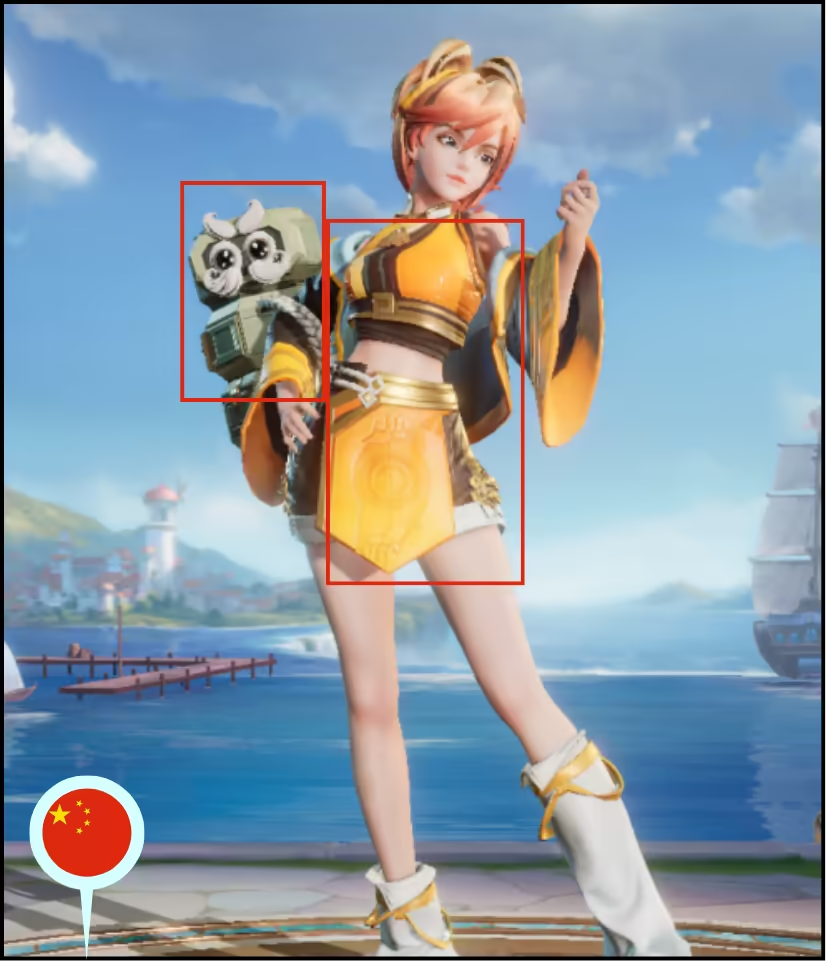
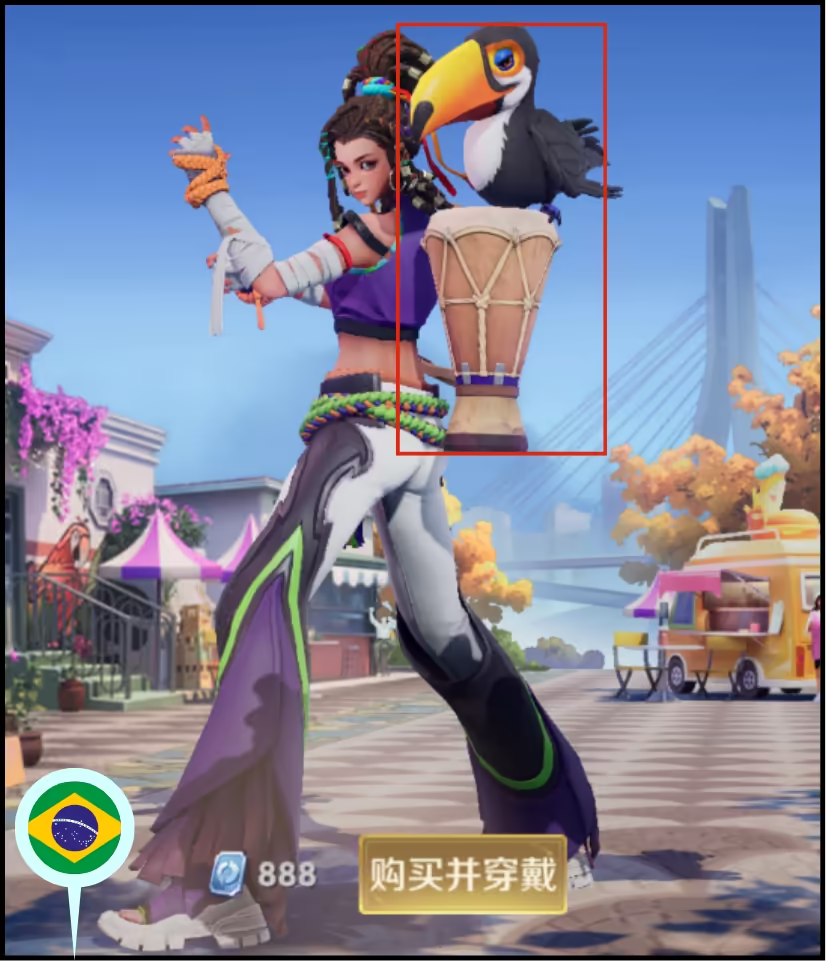
Consider Tencent’s flagship game, Honor of Kings, the top-grossing mobile game of 2026. To appeal to South American gamers, the team localized the game with region-specific content, worked with popular voice actors, and created customizable skins and unique designs. These were quite popular with Brazilian players.
Trends and aesthetics
While each country or region has its distinct history and culture, contemporary ideological trends often converge across borders. For example, movements for women’s equality are growing worldwide, showing a shared vision for fairness.
Similarly, trends like short-form video content and AI are influencing societies worldwide, illustrating how certain modern trends resonate universally, even among people of diverse cultural backgrounds. Unlike the previous categories, these trends and aesthetic preferences tend to shift more quickly (yearly).
Ideological trends
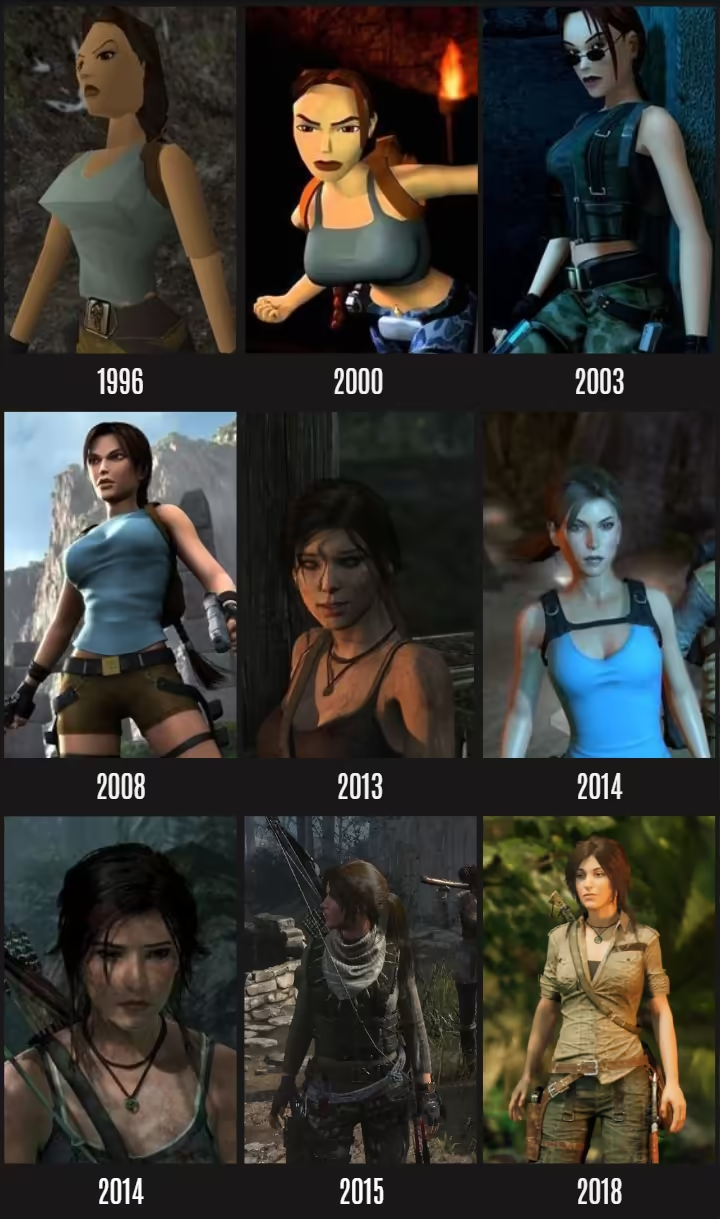
Lara Croft embodies the quick pace of aesthetic shifts. After the character’s debut in 1996, each new version of Lara illustrated the change in the industry and its preferences.
Her unrealistic proportions were toned down in exchange for a more realistic and modern appearance.
Aesthetics
As mentioned, aesthetic preferences are unrelated to human nature. Differences between countries and within each country can exist.
For instance, DataEye’s research on Korean mobile game preferences found two common styles: warm/cute themes and dark themes. This is key for localization.

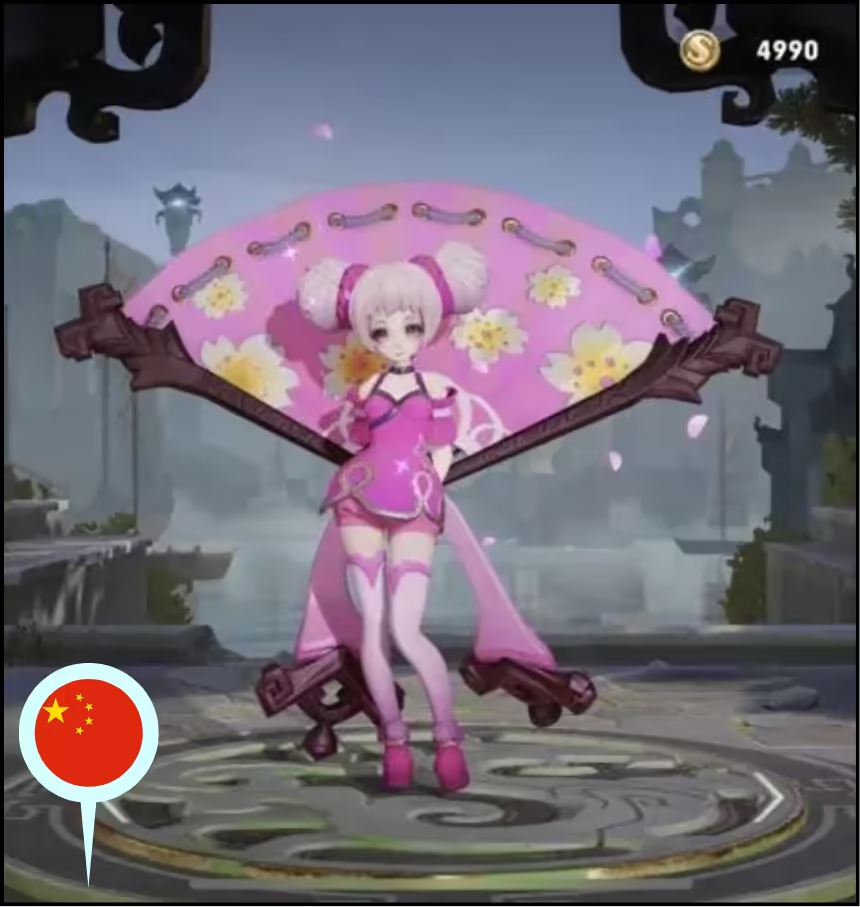
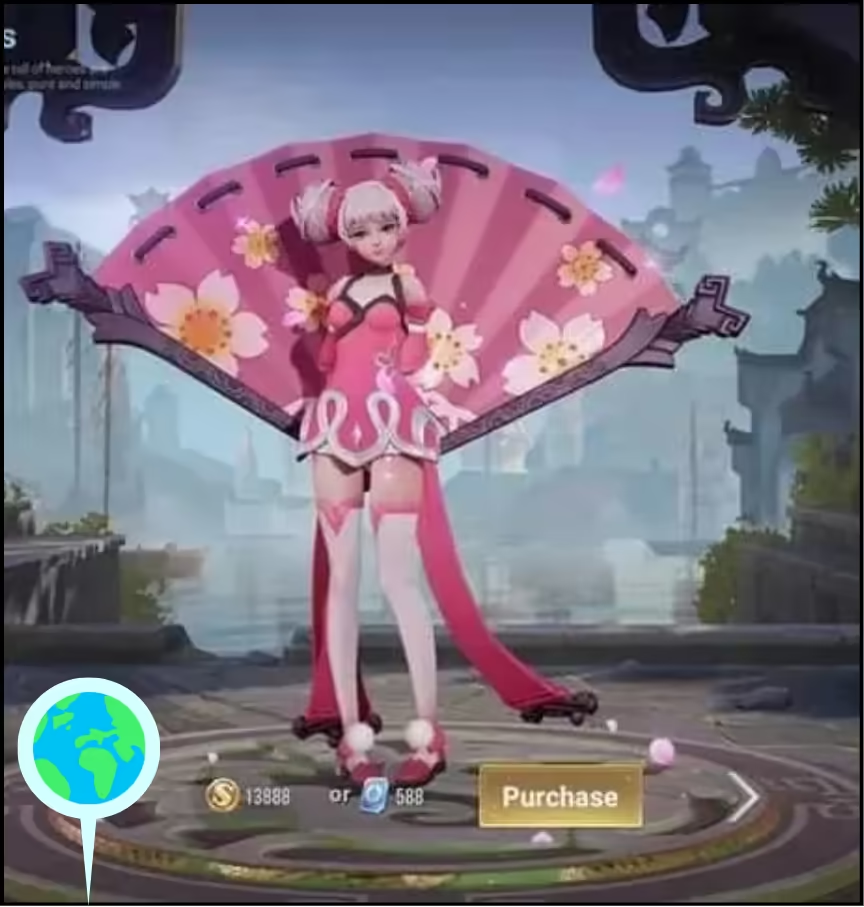
Once again, we can refer to Honor of King’s localization efforts. To cater to international audiences, they redesigned Xiao Qiao’s character. On the left is Xiao Qiao’s design with a childlike appearance, which is its current design on Chinese servers. On the right is its new design, which makes her look like a young woman.
Short-term trends
This category includes short-term trends, hot topics, and memes, which often change weekly. Think of how quickly gaming trends shift: Among Us exploded in popularity in 2020, then faded. Fall Guys followed a similar pattern. Even Wordle, which dominated social media, cooled off after its peak.
Social media trends move even faster. What’s viral on TikTok today might be forgotten next week. Remember the sea shanty trend? Or how about the butterboard craze?
While these trends can provide valuable insights into what audiences enjoy, they’re tricky for game localization. By the time you adapt your game to include a trending element, that trend might already be passé.
That’s why mobile game localization typically focuses on more stable elements. However, understanding current trends can still help you:
- Gauge what content styles resonate with local players.
- Identify potential themes for seasonal events.
- Shape marketing campaigns in different regions.
The key is using trend analysis to inform your strategy without betting too heavily on any single trend.
Key takeaways
There are four core cultural elements that a game needs to nail to succeed internationally.
1. Appeal to our shared experience.
A game that taps into universal human desires—like exploration (Zelda), competition (FIFA), or nurturing (Animal Crossing)—has a stronger foundation for global success.
2. Appeal to the target market’s historical or cultural preferences.
Leverage local cultural touchstones. Games built around “Journey to the West” (Wukong, 25 million units sold) or “The Romance of the Three Kingdoms” (Dynasty Warriors) consistently perform well in Chinese markets. Similarly, Norse mythology drives success in Western markets.
3. Match the target market’s aesthetic preferences.
Align character design and art style with your target audience. Action games targeting young male players might opt for designs like Stellar Blade. In contrast, games targeting female players may succeed with softer aesthetics like Genshin Impact.
4. Leverage popular trends.
While optional, creating content around seasonal events, holidays, and cultural moments that matter to your target market is generally a good idea.
Of these elements, localization primarily impacts the second and third points. Mobile localization teams can adapt cultural references, modify character designs, adjust dialogue tone, and fine-tune visual elements.
The first point must be built into the game’s core design, while the fourth point is typically handled through live operations and marketing rather than traditional localization.