
Translation Memory eXchange (TMX) is a standard file format used in the translation industry. It enables translation professionals to share translation memory data between different tools and vendors with minimal loss of critical information.
For example, in the image below, you can see how a TMX file structures a stored pair of sentences in Chinese with their English translation.

But, while TMX files are useful for sharing translations, their technical structure makes them difficult to read. From the translator’s viewpoint, they need a format that is easy to read and edit. That’s why converting TMX files into easier-to-read formats like XLSX (Excel) is common.
Translators and localization teams typically need this conversion in a few common scenarios:
- Reviewing translation memory content during QA;
- Cleaning up or deduplicating a TM before a new project;
- Sharing bilingual data with clients or stakeholders who don’t have CAT tools;
- Or merging translation memories from different tools into a single file.
There are many ways to convert TMX files, but the most common one in the industry is using the freely available Heartsome TMX Editor.
What is Heartsome TMX Editor?
Heartsome TMX Editor is a powerful tool for viewing and editing TMX files and is widely used in the language services industry. It is compatible with both 32-bit and 64-bit Windows systems, as well as Mac OS. Its key features include the following:
- Creating standard TMX files.
- Editing source texts and translations.
- Converting file encodings.
- Converting the TMX format to other file formats and vice versa.
For a complete list of features, please refer to the help documentation.
A note on Heartsome’s status: Heartsome Technologies stopped actively developing its products around 2014, and there is no official support. However, the TMX Editor remains freely available on GitHub, works reliably on modern Windows and Mac systems, and continues to be widely used across the industry for TMX conversion tasks. If you prefer actively maintained software, see the alternatives section at the end of this article.
How to convert TMX files using Heartsome TMX Editor
Open Heartsome TMX Editor and start by clicking on the “Tool” button, as you can see below.
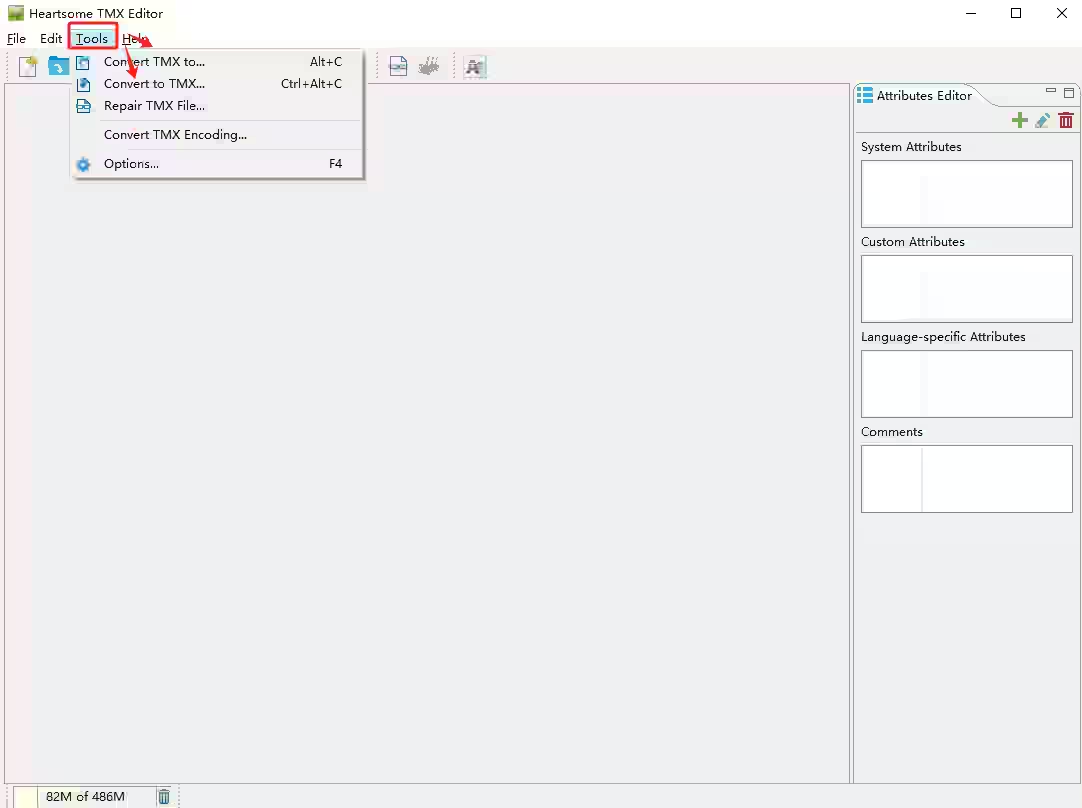
Then, you will find two options available.
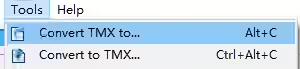
Choose the appropriate option for your project.
Option 1: Convert TMX files to XLSX
Click “Convert TMX to” and then go to the “Convert TMX to Specified Format” dialog window.
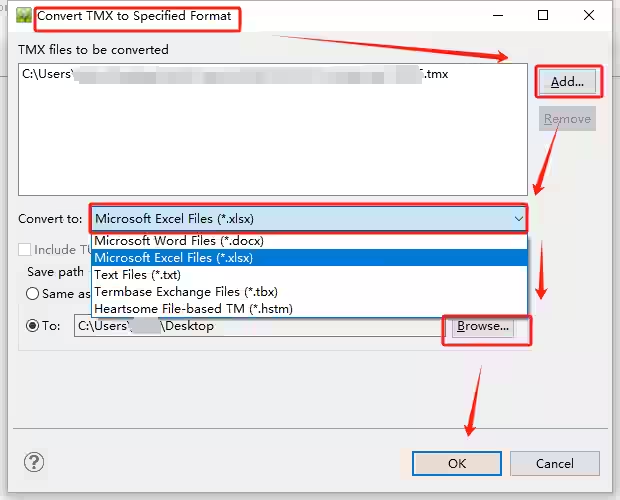
Once in that window, continue with the following steps:
- Click “Add” to include the TMX files you wish to convert.
- Select the target format from the “Convert to” dropdown menu (here, we select XLSX).
- Click “Browse” to choose the save path.
- Finally, click “OK.”
Option 2: Convert XLSX to TMX
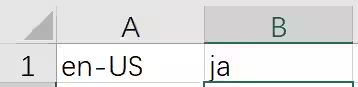
Before converting the file, remember that this feature only supports single external file conversions. You should also ensure that the first line of the XLSX file has language codes.
Click “Convert TMX to” and then select “Convert Specified Format to TMX.”
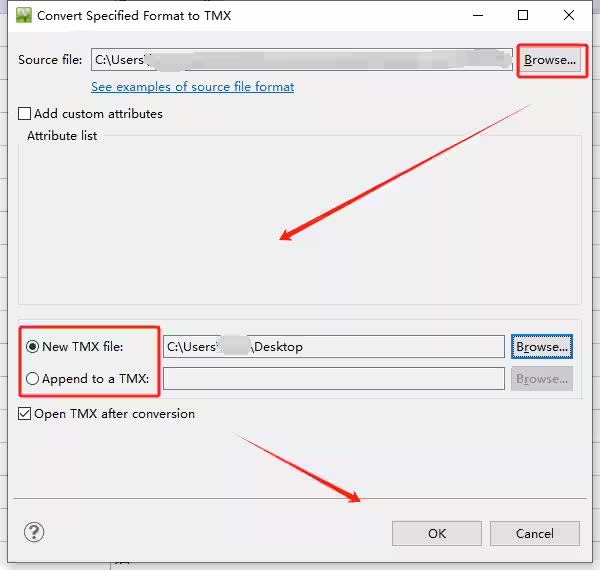
Once in that window, continue with the following steps:
- Click “Browse” to add the XLSX file.
- Choose either “New TMX file” or “Append to a TMX” based on your needs:
- If you want to create a new TMX file, select “New TMX file.”
- If you want to add the translation memory from the XLSX file to an existing TMX file, choose “Append to a TMX.” Then, click “Browse” to select the path.
- Then click “OK”.
Possible issues when using Heartsome TMX Editor
While Heartsome TMX Editor is reliable, minor problems can occur. Below, we will cover some common ones and how to solve them.
Error 1: A language code error when converting from XLSX to TMX
This error indicates that your language code does not conform to the ISO 639-1 and ISO 3166-1 standards. To fix it, you need to change the language code in the first line of the XLSX file.
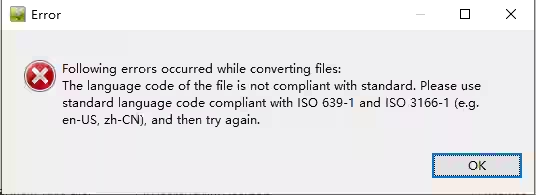
For reference, here are some of the most commonly used language codes that comply with the standard:
| Language | Code |
|---|---|
| English (US) | en-US |
| English (UK) | en-GB |
| Simplified Chinese | zh-CN |
| Traditional Chinese | zh-TW |
| Japanese | ja |
| Korean | ko |
| German | de-DE |
| French | fr-FR |
| Spanish | es-ES |
| Portuguese (Brazil) | pt-BR |
A common mistake is using non-standard abbreviations such as “CHS” for Simplified Chinese or “ENG” for English. Heartsome requires the ISO format shown above.
Error 2: An XLSX file cell format error
This can happen because of an incorrect cell format in the XLSX file. Check if any cells are not formatted as “Text” or “General.” If possible, change the cell format to either option.
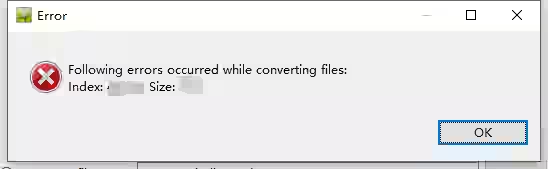
Error 3: A conversion error during the TMX to XLSX conversion.
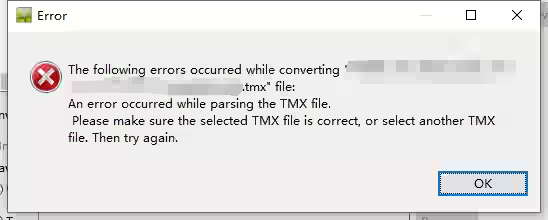
An error message like the one below may show that the internal structure of your TMX file is damaged. This is a serious issue. You can verify the integrity of your file using an XML file validator or seek help from localization engineers.
An alternative to Heartsome TMX Editor—Xbench
While Heartsome TMX Editor is a powerful tool and likely the best tool for this purpose, Xbench can be a valuable alternative for converting TMX files.
The Xbench process
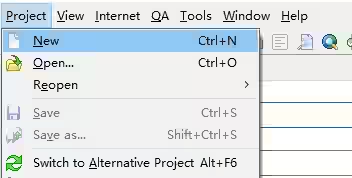
With Xbench, regardless of format, you must create a project first. Start by clicking on the “Project” button and selecting “New” in the dropdown menu.
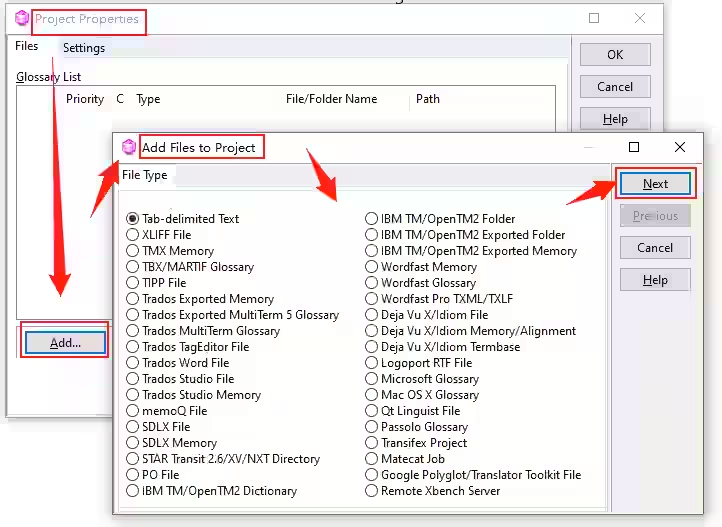
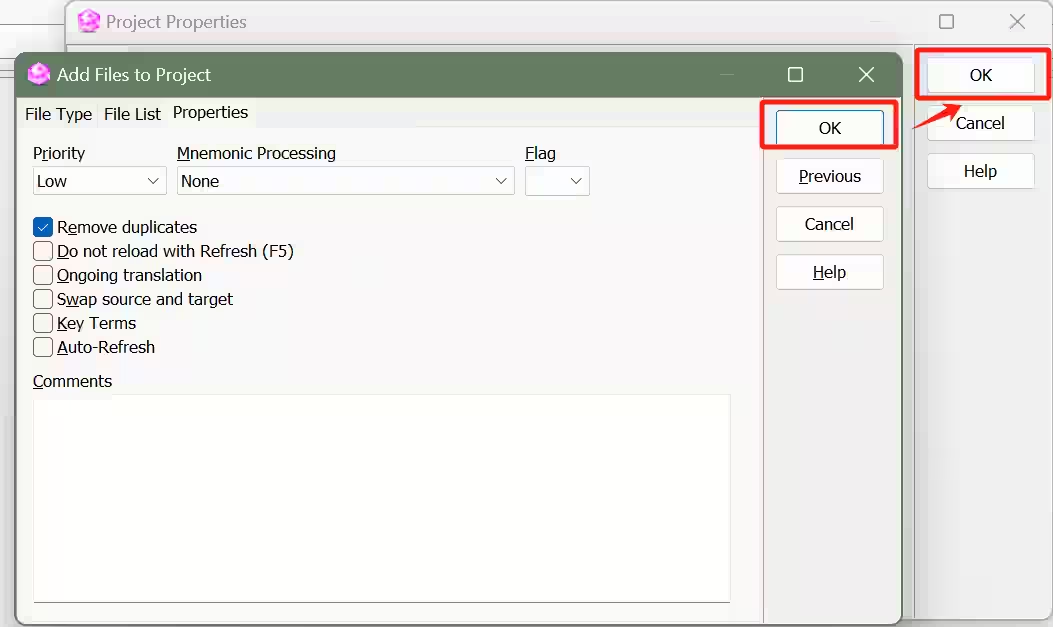
Once in the “Project Properties” window, click the “Add” button and choose your file format in the “Add Files to Project” window. Here you have two paths:
- To convert from TMX to other formats, choose the “TMX Memory” option.
- To convert from different formats to TMX, select your file’s format and click “Next.”
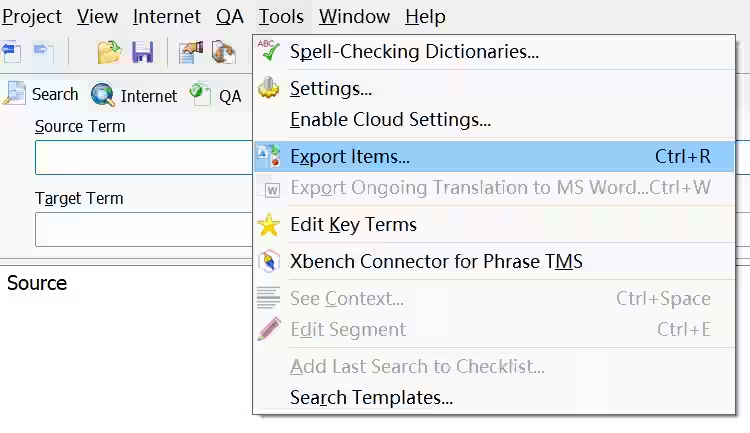
Then click on “Tools” and choose “Export Items.”
You can now adjust the following settings in the “Export Items” window:
- Format: Choose the file format you want to export. There are four file formats for you to choose from:
- Tab-delimited text file
- TMX file
- XLSX file
- DOCX file
- File name: Select the file path for export.
- Language: Select the source language and target language of the exported file.
Finally, click on the “OK” button.
Note: Unlike Heartsome TMX Editor, Xbench does not support exporting multilingual TMX or XLSX files.
Another alternative—Maxprograms TMXEditor
For those who want an actively maintained desktop tool, Maxprograms TMXEditor is worth considering. Its source code is available on GitHub, it runs on Windows, Mac, and Linux, and it supports direct TMX-to-Excel and Excel-to-TMX conversion from its File menu without needing to set up a project first. Note that while the source code is open, the packaged installers require a subscription after a free 7-day trial. It also offers features like removing duplicates, validating TMX files, and cleaning invalid XML characters—useful for fixing the kind of structural damage described in Error 3 above.
Alternatively, for teams with developers or technical resources, TMX files can be parsed programmatically using Python libraries such as lxml and pandas, which allows for custom batch processing and conversion workflows beyond what GUI tools offer.
Key takeaways
While it is reliable software, some common problems include:
- Language code errors (requiring ISO standard compliance).
- Excel formatting issues (needing specific cell formats).
- Parsing errors that may indicate damaged TMX files.
For those who can’t use Heartsome TMX Editor, Xbench offers similar conversion capabilities through its project system, and Maxprograms TMXEditor provides an actively maintained open-source alternative with direct conversion features. Teams with technical resources can also handle TMX conversion programmatically using Python.
